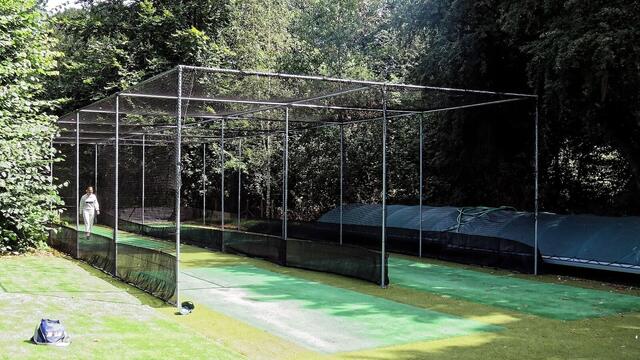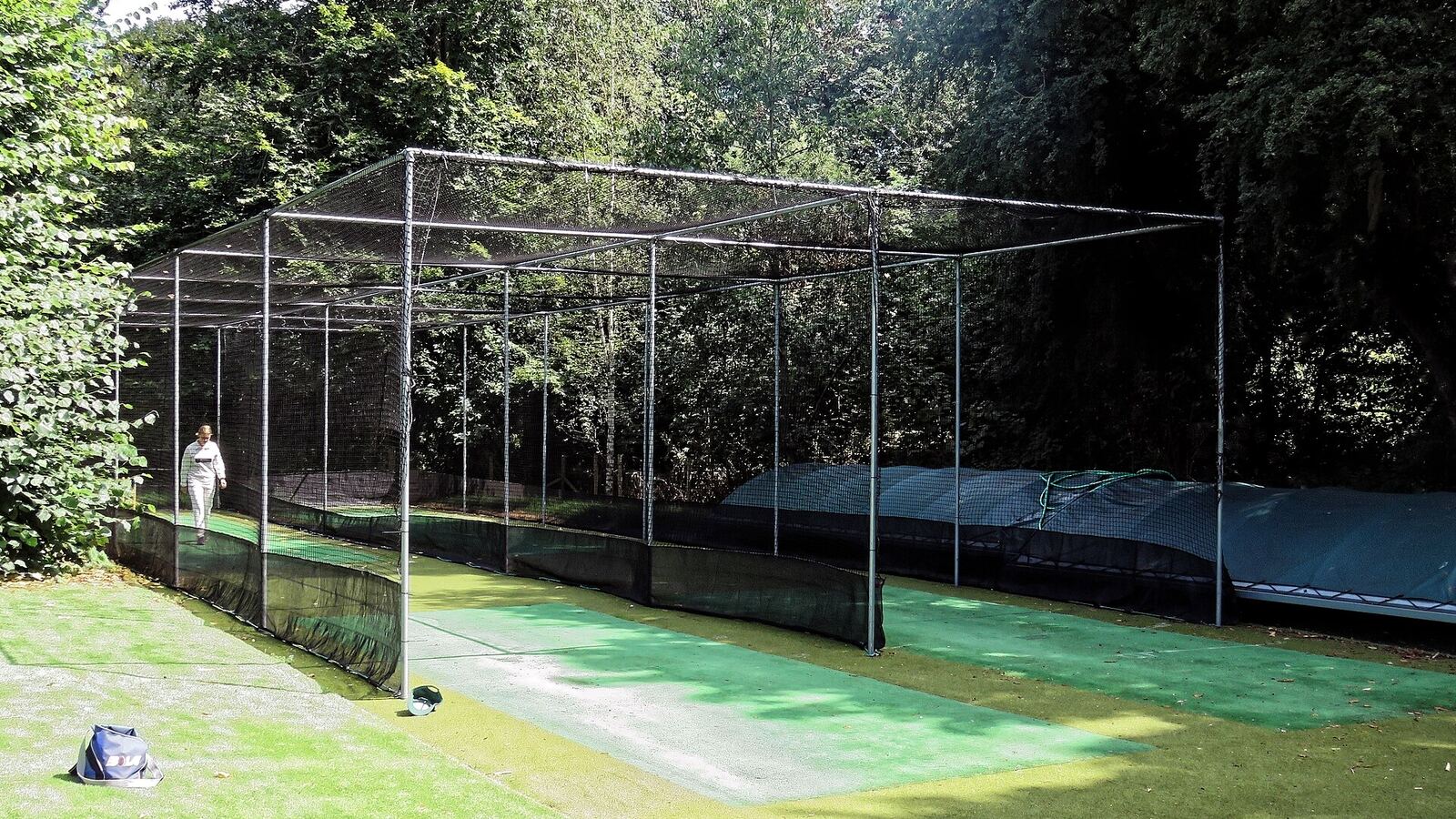
Bowlers who take wickets regularly tend to have one thing in common: they can land the ball where they want, over after over. These cricket bowling target drills focus on that skill, line and length, using simple tools like a practice net, a set of stumps, cones and tape. You can run them at a club net or in a garden with a net behind the stumps, and most need only one bowler and a bag of balls.
Why target practice helps bowling accuracy
Without feedback, it's easy to bowl for half an hour and not know whether you improved. A target zone on the pitch gives instant, honest feedback: the ball either landed in it or it didn't. Counting hits turns practice into something you can measure and repeat.
A net behind the stumps also lets you bowl far more balls per session, because you aren't chasing each one. That repetition is where consistency is built.
Setting up a bowling target area
You'll need:
- A set of stumps (or a stump target) at the batting end
- A net or backstop behind the stumps to catch the ball
- Markers: flat cones, chalk, tape or a mat to mark a length zone
- A bag of balls, ideally six or more so you can bowl a full over before collecting
A regulation pitch is 22 yards between the stumps. If you're short of space at home, bowl from a shorter distance while you work on action and release, then move back when you have room. Junior pitch lengths vary by age group, so check what your club uses.
Marking a good length
There's no single "good length" for every bowler. It depends on your pace, height, the conditions and the batter. A practical approach is to ask a coach or experienced teammate where your stock ball should land and mark that as a zone roughly a stride long and a little wider than the stumps. Adjust it as you learn.
Drill 1: The six-ball zone count
Bowl an over at your marked length zone. Count how many balls pitch inside it. Write the number down. Repeat for several overs.
- Track your score per over across sessions.
- Once you consistently hit a high share of balls in the zone, shrink it.
- Keep your normal run-up and action; don't slow down just to be accurate.
Drill 2: Top of off stump
Place a cone or a small marker just outside off stump at your good length, then add a target such as a single stump or a marker on top of off stump at the far end. The aim is to pitch near the cone and finish over the top of off stump.
This is a classic line-and-length channel for many bowlers, and practising it builds the habit of making the batter play.
Drill 3: Corridor channel
Lay two lines of tape or a row of cones to create a narrow channel running down the pitch on and just outside off stump. Bowl so the ball pitches and travels inside the corridor. It trains line separately from length, which helps if your misses are mostly wide.
Drill 4: Yorker target
Mark a small zone right at the base of the stumps, near the batting crease. Bowl six balls aiming to land in it. Yorkers are hard to execute, and missing slightly can produce a full toss or half-volley, so practise them in short, focused sets once you're warm.
- Use a shoe or a flat marker at the base of the stumps as a visual target.
- Alternate yorkers with stock balls so you practise changing length without changing your action.
Drill 5: Line-switch over
Call a line before each ball: "off", "middle" or "outside off". A partner can call it at random, or you can follow a written sequence. Bowl to that line on your stock length. This builds control under a small amount of pressure, a bit like adjusting your plan in a game.
Drill 6: Spin target loop
For spin bowlers, place a target zone on a fuller length and a stump or marker as the finishing target. Focus on landing the ball in the zone with consistent flight. Count hits, then work on varying pace slightly while still landing in the zone. A coach can help you set a sensible spot for your type of spin.
Drill 7: Pressure over
Finish the session with a game: you need, say, four balls out of six in the zone to "win" the over. Miss the target and you bowl another over. Playing for a score helps practice feel more like a match.
When shopping for stumps, targets or nets on AliExpress, check listing dimensions and materials, read seller ratings and recent reviews, and confirm the return policy before ordering.
Tips for useful bowling practice
- Warm up properly. Bowling is demanding on the body. Build up gradually and follow your club or coach's guidance on how much to bowl, particularly for younger players, where many associations publish workload guidelines.
- Quality over volume. Stop when your action gets tired and sloppy.
- Keep a simple log. Overs bowled, zone hits, and any notes on what felt right.
- Film occasionally. A phone video from side-on or behind can show changes in your action.
- Mix in batting practice. A good home setup serves both; see our guide to cricket practice nets at home.
Safety around the net
- Make sure the net behind the stumps is anchored and its mesh is small enough to stop a cricket ball.
- Keep spectators, children and pets out of the area to the sides of the pitch.
- If someone is batting, they should wear proper protective gear for hard-ball cricket.
- Collect balls only when the bowler has stopped.
Find more general guidance on our safety page and more cricket articles in the cricket category.
Frequently asked questions
How do I practise line and length on my own?
Set up stumps with a net behind them, mark a length zone with cones or tape, and bowl overs while counting how many balls land in the zone. A bag of six or more balls means you collect less often.
Where should a good length be marked?
It varies with your pace, height and conditions. Ask a coach or experienced teammate to help you place it, then adjust as you learn how batters respond to your bowling.
How many balls should I bowl in a practice session?
It depends on your age, fitness and how often you bowl. Many clubs and associations publish workload guidelines for younger bowlers. Stop when your action starts to break down, and follow your coach's advice.
Can spinners use the same target drills?
Yes. Move the target zone to suit your length, focus on consistent flight and landing spot, and then add small variations in pace while still hitting the zone.
Do I need a full-length pitch for bowling drills?
No. A shorter distance is useful for working on action and release. Bowl from full length when you have the space so your sense of distance what you face in matches.
Ready to set up your practice space?
Browse cricket practice nets and compare sizes on AliExpress.
Some links on this page are affiliate links to AliExpress. If you buy through them we may earn a small commission at no extra cost to you. We don’t test or endorse individual listings, so always check the seller, sizes and return policy. Learn more.