Practising at home can make archery much easier to fit into a busy week. But a good backyard archery range setup starts long before you buy a target. It starts with two questions: is it legal here, and is there genuinely enough safe space? If the answer to either is no, the right range is a club one. If both are yes, this guide walks through planning a safer home range step by step.
Nothing here guarantees safety. Archery equipment can cause serious injury, and every site is different. Use this as a starting point, and get advice from a local archery club or coach for your bow and your space.
Step 1: Check the law and local rules
Rules for archery on private property vary widely by country, region and municipality. Some places permit it with restrictions, some require distances from roads, paths or property lines, and some prohibit it entirely in residential areas.
- Contact your local authority or police non-emergency line and ask directly.
- Check any rental agreement, homeowners' association rules or property deeds.
- Ask at a nearby archery club; members often know the local situation.
- Consider talking to neighbours. Even where it's legal, people appreciate knowing what's happening.
If you can't confirm that it's allowed, don't shoot at home.
Step 2: Assess whether you have enough space
The space you need depends on your bow, your skill and the distance you want to shoot. There's no single safe number, but every safe layout has the same parts:
- Shooting line: where the archer stands.
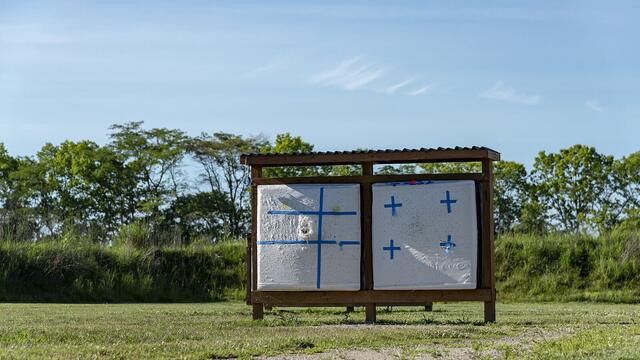
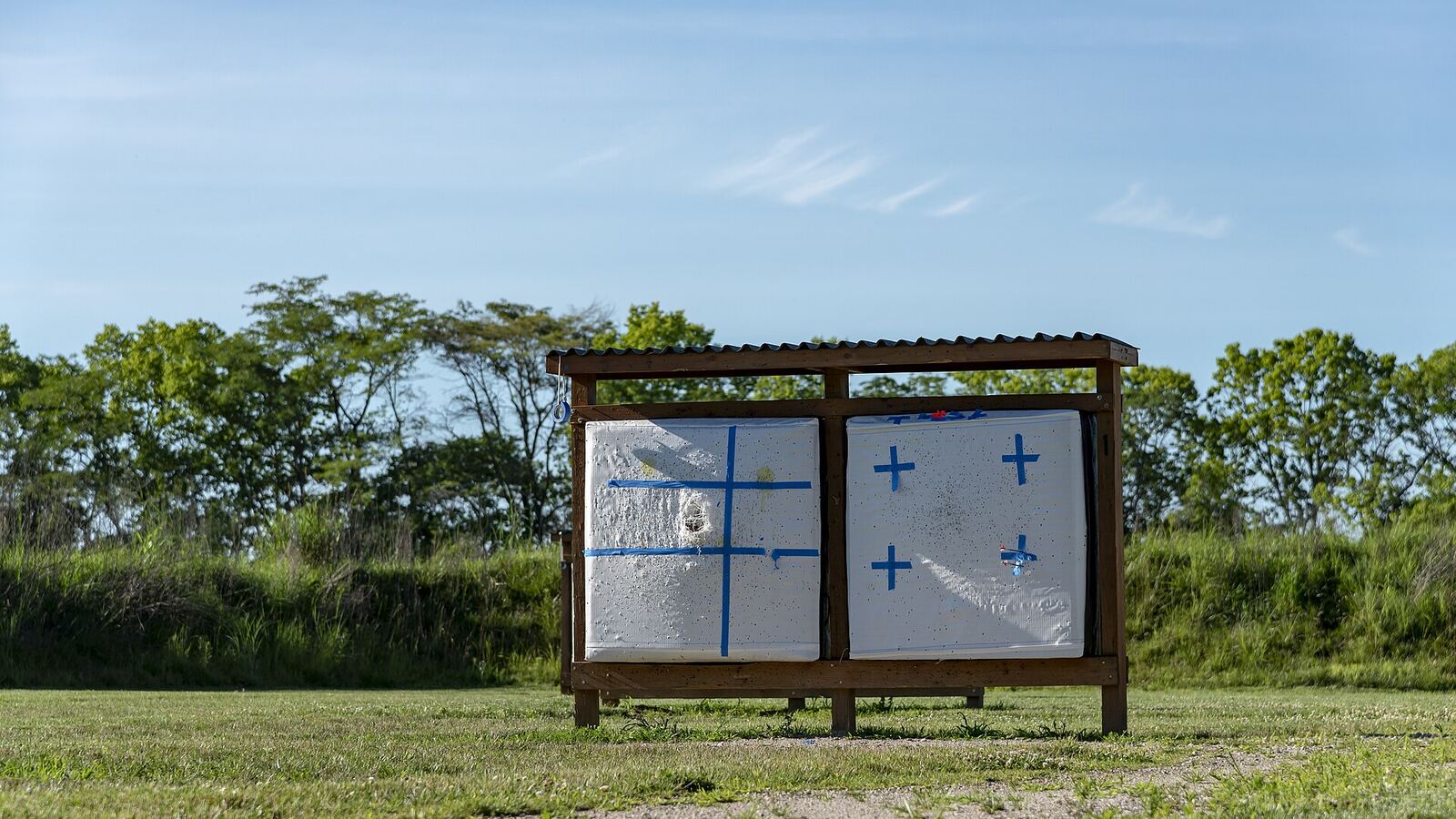
- Target area: the boss or block on a stable stand.
- Overshoot zone: clear, safe ground behind the target where a missed arrow can land without reaching anyone or anything.
- Side zones: clear areas left and right of the line of fire, because arrows can veer.
Ask yourself honestly: if an arrow missed the target completely, where would it go? If the answer is a neighbour's garden, a road, a footpath, a shed people use or your own patio, the space isn't suitable as it stands.
Step 3: Choose the shooting direction
Pick the direction with the most open, controlled space behind the target and the least chance of anyone walking into it.
- Never shoot toward houses, windows, roads, paths, gates, driveways, play equipment or animals.
- Prefer a direction where the ground behind the target is soft and open, or rises, such as an earth bank, rather than hard walls or fences that could deflect arrows.
- Avoid shooting across any route people use to come and go.
- Think about the sun. Facing straight into it makes it hard to see the target and anyone near it.
Step 4: Pick and place the target
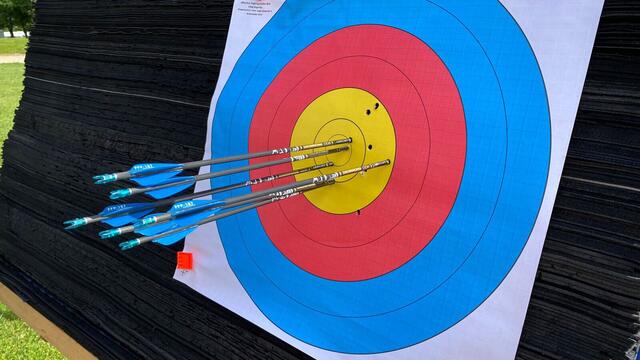
Choose a target that matches your arrows and draw weight; our archery target types guide explains bag, foam block, straw boss and 3D options.
Placement tips:
- Put the target on a stable stand or base so it can't tip when hit.
- Set it at a height where the centre is roughly in line with your natural aim; this reduces high and low misses.
- Start close. Beginners and anyone returning after a break should shoot short distances first and move back as groups tighten.
- Leave space between the target and any backstop net so the net can move freely.
Step 5: Add a backstop net as an extra layer
A backstop net hung behind and around the target can help catch arrows that miss or pass through. Hang it with slack so it can absorb energy, let it reach the ground, and extend it beyond the target on all sides.
But remember: the net is a supplement, not a replacement for the overshoot zone. Your range should still be safe with the net taken away. Read our full archery backstop net safety guide before buying or hanging one.
When comparing nets on AliExpress, check whether the listing is specifically for archery, the stated materials and size, any draw-weight guidance, seller ratings, recent reviews and the return policy. If the information isn't there, ask the seller before ordering.
Step 6: Control access to the range
Most home archery accidents you hear about involve someone being where the archer didn't expect. Plan for it:
- Close and, if possible, lock gates that lead into the overshoot or side zones while shooting.
- Make it a household rule that nobody enters the garden from the target end during a session.
- Put up a simple sign or marker when the range is in use.
- Keep pets indoors.
- Shoot only when you can see the whole area clearly. Don't shoot in poor light.
Step 7: Set clear range rules
Borrow the habits of club ranges. Simple, consistent rules make a home range safer:
- Bows are only loaded (arrow nocked) at the shooting line, pointed at the target.
- Everyone else stands behind the shooting line.
- Use an agreed call, such as a whistle or a clear word, to start and stop shooting.
- Nobody goes forward to collect arrows until everyone has finished and bows are down.
- If anyone steps into the range, stop shooting immediately.
- Children shoot only with close, active adult supervision.
- Never shoot straight up into the air.
Step 8: Check equipment before every session
- Inspect your bow, string and arrows for damage. Don't shoot cracked or damaged arrows.
- Check the target for worn spots and the stand for stability.
- Check the backstop net for holes, fraying and secure fixings, especially directly behind the target.
- Wear any protective gear recommended for your bow, such as an arm guard and finger tab or glove.
When a backyard range isn't right
If your space is short, crowded, overlooked or the rules are unclear, a local archery club is the better choice. Clubs typically offer coaching, proper ranges and insurance arrangements, and many run beginner courses. You'll often progress faster with coaching anyway. You'll find more general advice on our safety page and in the archery category.
Frequently asked questions
How much space do I need for a backyard archery range?
There's no single figure. You need room for your shooting distance plus a clear overshoot zone behind the target and clear zones to the sides, with nobody able to walk into them. Your bow, skill level and local rules all affect this, so ask a club or coach about your specific setup.
Is a backstop net enough to make my garden safe for archery?
No. A net can help catch misses, but it isn't guaranteed to stop every arrow and doesn't replace a safe overshoot zone. If your range wouldn't be safe without the net, it isn't safe with it.
Do I need permission to shoot archery in my backyard?
It depends where you live. Some places allow it, some restrict it and some ban it. Check with your local authority or police, and review any rental or association rules, before you shoot.
Can children use a backyard archery range?
Children should only shoot with close, active supervision from an adult who understands archery safety, using equipment suited to them. A club beginner course is a good way to learn safe habits.
What should I put behind my archery target?
Ideally, open and safe ground with nobody able to enter it, plus a stable target and, if you like, a backstop net hung with slack. Avoid hard walls or fences directly behind the target, which can deflect arrows.
Ready to set up your practice space?
Browse archery backstop nets and compare sizes on AliExpress.
Some links on this page are affiliate links to AliExpress. If you buy through them we may earn a small commission at no extra cost to you. We don’t test or endorse individual listings, so always check the seller, sizes and return policy. Learn more.