Field hockey target practice with a goal net is one of the simplest ways to turn hard hitting into accurate scoring. In a match, the goalkeeper covers a lot of the frame, so the shots that go in tend to be low, quick and placed. A goal net with marked targets gives you a clear picture of where every ball ends up, and it saves you a lot of chasing behind the backline.
This guide covers how to set up a practice goal, how to add targets, and a set of drills you can run alone or with a small group.
Know the goal you are aiming at
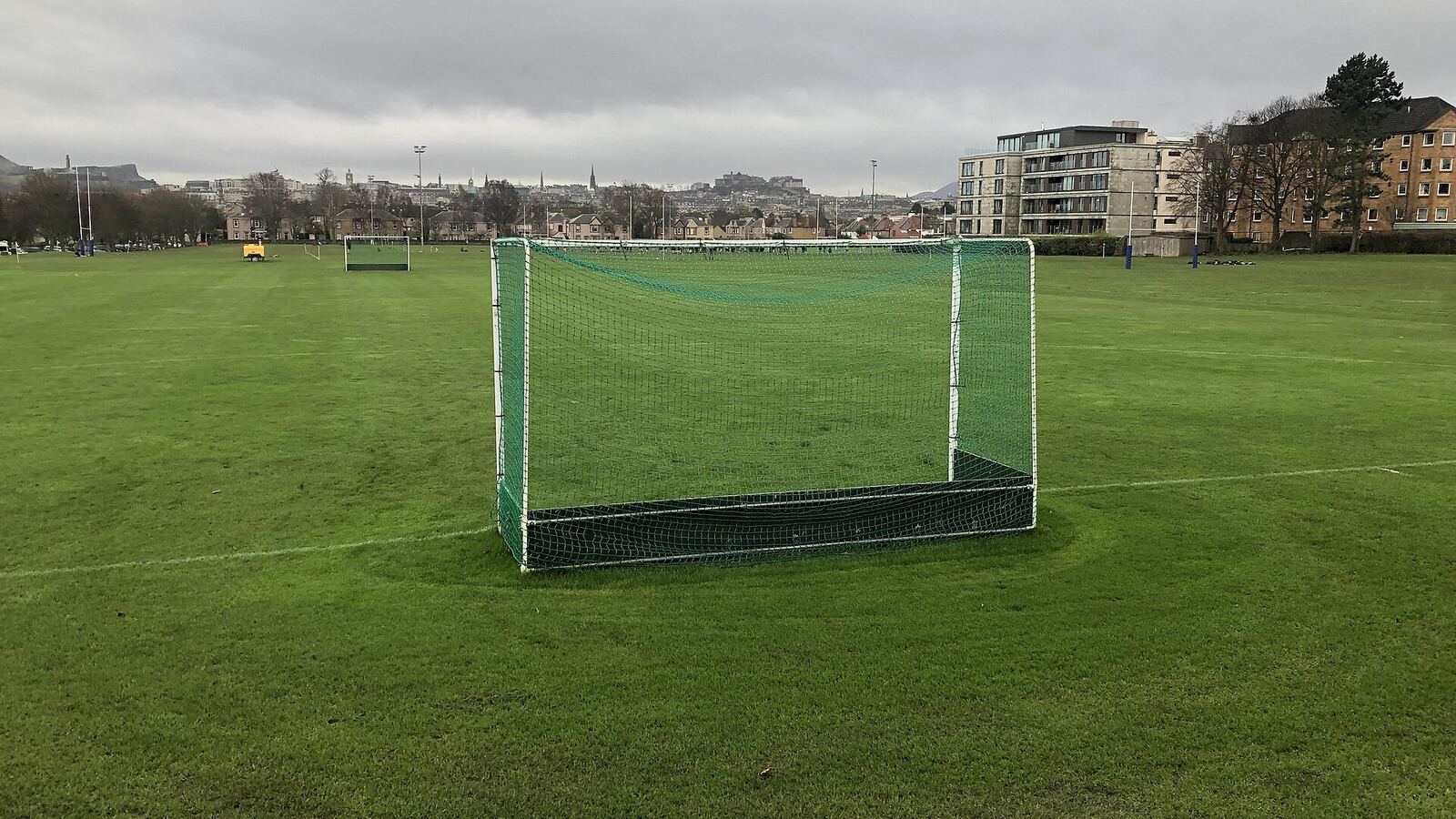
A full-size field hockey goal is 3.66 m wide and 2.14 m high (4 yards by 7 feet), and shots must be taken from inside the shooting circle to count in a game. Many home and youth goals are smaller, and junior formats vary by country and association, so check your league's rules if you want your practice goal to match what you play on.
For pure target work, a smaller goal is not a problem. Hitting a small frame consistently tends to make the full-size goal feel bigger on match day.
Things worth checking on any practice goal:
- Frame size and depth. A deeper goal lets the net absorb the ball rather than throw it straight back out.
- Backboard. Match goals have a low backboard along the bottom. Some practice goals include one; others rely on the net alone. A low board makes a satisfying sound and takes some wear off the net from hard drives along the ground.
- Net strength. Field hockey balls are hard and travel fast. Look for a net described as suitable for hockey, and check the twine thickness and mesh size on the listing.
- Weight and anchoring. A light frame can tip or creep when hit repeatedly. See our guide on how to anchor a practice net.
Adding targets to your goal
You can practise into an open goal, but targets make the session far more useful. Common options:
- Corner target pockets. Fabric or net pockets that clip into the corners. They are a direct copy of the target areas keepers find hardest to reach.
- Target sheets. A full cover that hangs across the goal with holes cut in specific spots, usually the corners and low areas. The sheet blocks the middle so only accurate shots go through.
- DIY markers. Cones on the goal line, a rope tied across the goal at knee height, or a pool noodle wedged into a corner all work for zero cost.
For field hockey, the low corners matter most. Most hits, pushes and slaps travel along or just above the ground, so place at least two of your targets low and one or two higher for drag flicks and deflections if you are working on those.
The same choice between full sheets and individual targets comes up in football, and our comparison of goal target sheets vs corner targets covers the trade-offs in more detail.
Field hockey goal net drills
Warm up first, and make sure nobody is standing behind or beside the goal while you shoot. Start each drill at a controlled pace and only speed up when your accuracy holds.
1. Push to the corners
Stand near the top of the circle. Push the ball to the left low corner ten times, then the right low corner ten times. Count hits on target. The push is the most controlled shot, so it is a good baseline before you add power.
2. Receive and shoot
Place a rebound board or a teammate to one side. Pass, receive on the move, and shoot to a called corner within two touches. This works the link between receiving cleanly and getting the shot away quickly, which is how most goals happen in games.
3. Reverse stick finish
Set up on the left side of the circle (for a right-handed player) and finish with a reverse stick hit or sweep to the far post. Reverse shots are harder to control, so start close and use a big target.
4. Slap hit to the backboard
Aim low and hard at the backboard area or a low target pocket. Focus on keeping the ball down. If balls are flying over the top of the goal, slow down and check your ball position and stick angle.
5. Deflection station
With a partner feeding hard balls across the face of goal, practise angling your stick to redirect the ball into a corner target. Use soft feeds at first and wear appropriate protection, as deflections can go anywhere.
6. Penalty corner routine
If you have enough players, run a simple corner: injection, stop, shot. Track how many shots hit a target. Drag flicking at goal is an advanced skill, so follow your coach's guidance on technique and safety, and only practise it with proper protective equipment for anyone near the goal.
A simple scoring system
Targets become a game when you keep score:
| Result | Points |
|---|---|
| Ball hits a corner target | 3 |
| Ball goes in the goal but misses targets | 1 |
| Ball misses the goal | 0 |
Take 20 shots per session from the same spots and write down the score to see whether your accuracy improves over time.
Setting up safely at home
Field hockey balls are hard enough to damage windows, fences and people. A few sensible steps:
- Put the goal against a solid background, or add a ball stop net behind it. Our guide to ball stop and barrier netting explains the options.
- Keep a clear zone around and behind the goal, and never shoot while someone is retrieving balls.
- Wear shin guards and mouthguards as you would in training. For goalkeeping or deflection drills, use full keeper kit or skip the keeper entirely.
- Check the net and frame regularly for frayed twine, loose joints or bent tubes.
Remember that a practice net reduces stray balls but is not guaranteed to stop every shot. Our safety page has more general advice.
Choosing a surface
Grass makes the ball bounce and slow down, which is less like most modern club pitches. A smooth patio, a sports court or a short piece of artificial turf gives a truer roll.
When buying a goal, net or mat online, read the listing dimensions, materials and seller reviews carefully, and check the return policy. Our AliExpress buying checklist walks through what to look for.
Frequently asked questions
What size is a field hockey goal?
A full-size field hockey goal is 3.66 m wide and 2.14 m high (4 yards by 7 feet). Junior and small-sided formats can use smaller goals, and these vary by association, so check with your club or league if you need an exact match.
Can I use a football goal for field hockey practice?
You can, as long as the net is strong enough for a hard hockey ball and the mesh is small enough that the ball can't pass through. Football goals are larger, so add targets to keep the practice focused on accuracy.
How do I stop the ball bouncing out of the goal?
A deeper goal, a looser net and a low backboard all help absorb the ball. Some players hang an extra layer of netting a little behind the main net to soak up energy.
How many shots should I take in a practice session?
There is no fixed number. Many players find 15 to 30 focused shots per drill is enough to stay sharp without getting sloppy. Quality matters more than volume, so stop when your technique starts to slip.
Do I need a goalkeeper for target practice?
No. Targets in the corners copy the areas a keeper finds hardest to cover. If you do practise with a keeper, they should wear full protective kit.
Ready to set up your practice space?
Browse hockey shooting targets and compare sizes on AliExpress.
Some links on this page are affiliate links to AliExpress. If you buy through them we may earn a small commission at no extra cost to you. We don’t test or endorse individual listings, so always check the seller, sizes and return policy. Learn more.