If you want a player to hit more at home, the choice usually comes down to a hitting net or a batting cage. Both catch batted balls, but they differ hugely in size, setup effort and what kind of practice they allow. This hitting net vs batting cage comparison walks through space, drills, safety, setup and running costs so you can pick the one that fits your yard and how the player actually trains.
Quick definitions
Hitting net: A freestanding net, often square or rectangular, that sits a short distance in front of the hitter. It is designed mainly for tee work and soft toss from the side. Many fold away and can be set up in minutes.
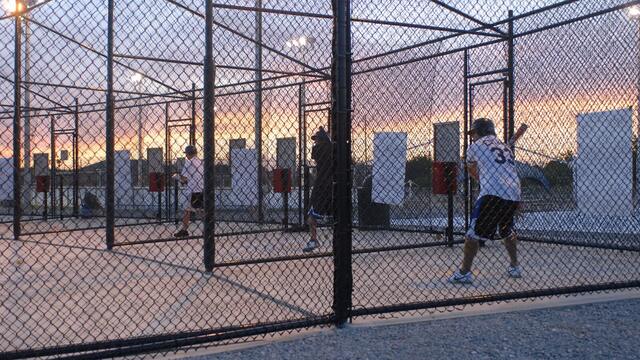
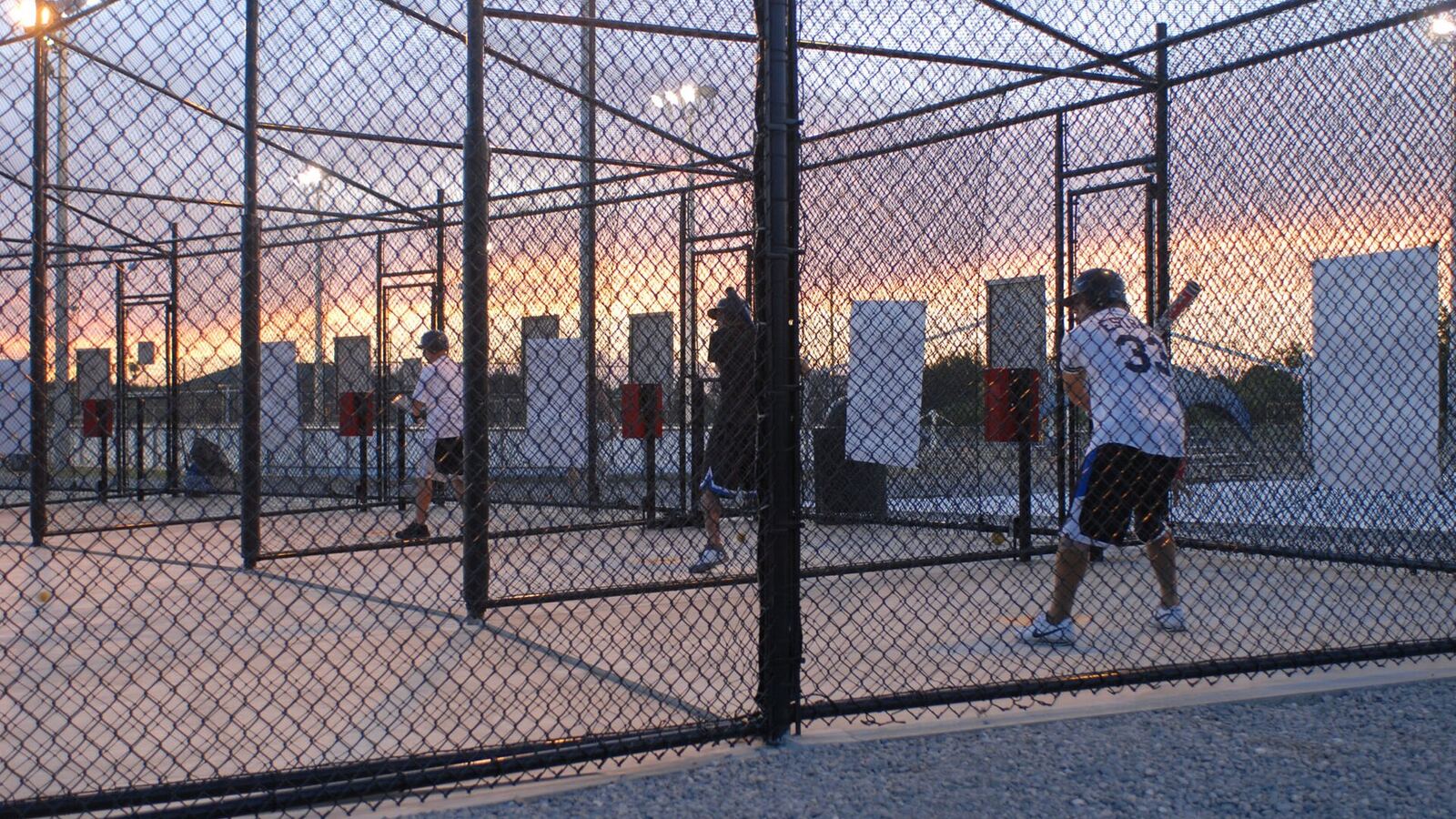
Batting cage: A long, enclosed tunnel of netting on a frame (or hung from posts or cables), surrounding the hitter on the sides and top. It allows front toss, pitching machines and live pitching in a contained space.
Side-by-side comparison
| Factor | Hitting net | Batting cage |
|---|---|---|
| Space needed | Small footprint | Long, wide area plus room for anchoring |
| Setup time | Usually quick | Longer; often a semi-permanent install |
| Drills | Tee work, side soft toss | Tee, soft toss, front toss, machine, live pitching |
| Containment | Catches balls hit into the front | Contains balls on sides and top |
| Portability | Often portable | Usually stays in place |
| Weather exposure | Easy to pack away | Stays out unless taken down |
| Local rules | Rarely an issue | Large structures may need checking |
| Extras | Tee, balls | Tee, L-screen, mat, possibly a machine |
Space: the deciding factor for many
Measure your yard before anything else. A hitting net needs room for the net, the hitting distance, the swing, and clearance around the hitter. A batting cage needs all of that plus the length for the feeding or pitching distance, room behind the plate, and space around the outside for anchors and access.
If your yard is short or narrow, a hitting net is likely the practical choice. If you have a long, flat stretch and want to see pitched balls, a cage becomes realistic. Our backyard batting cage net guide explains cage planning in detail.
Drills each one supports
Hitting net drills
- Tee work: Set tee heights and positions for inside, middle and outside pitches.
- Side soft toss: A partner tosses from the side, behind a protective position, into the hitting zone.
- One-handed drills: Top hand and bottom hand swings off the tee.
- High tee, low tee: Work on different zone heights.
These drills can build mechanics and bat path, but they do not include tracking a ball coming from the front.
Batting cage drills
Everything above, plus:
- Front toss from behind an L-screen.
- Pitching machine work for repetition at set speeds.
- Live pitching for timing and pitch recognition.
- Situational hitting, such as working on hitting to the opposite field.
The cage's main advantage is that the hitter can see and time a ball coming towards them.
Safety differences
Neither option is risk-free, and no net is guaranteed to stop every ball.
- Hitting nets are mainly built to catch balls hit forwards. Foul balls and mishits can go sideways or up, so keep people well behind and to the side of the hitter. Anyone tossing should stand where they are protected from the ball's path, and some hitting nets come with or support a protective screen.
- Batting cages contain balls in more directions, but anyone feeding or pitching inside should use a protective L-screen, and batters should wear a helmet when facing pitched or machine-fed balls.
For both, inspect the netting and frame regularly and supervise younger players. See our safety page for general advice.
Setup and upkeep
A hitting net is usually a quick setup: unfold, lock the frame, stake or weigh it down. It is easy to put away after each session, which can help it last longer.
A cage is a project. You need to assemble or build the frame, hang and tension the net, anchor it and check it after bad weather. Netting left outside is exposed to sun and rain, so many owners take it down or cover it out of season. Read our guide on sports net care and UV protection.
Cost factors to consider
Prices vary a lot, so compare listings yourself. Beyond the net itself, consider:
- Hitting net: tee, balls, possibly a hitting mat.
- Batting cage: frame (if not included), anchors, L-screen, mat or turf, tee, balls, and possibly a pitching machine.
A cage's total cost usually includes several extras, so budget for the whole setup, not just the netting.
Which should you choose?
Choose a hitting net if:
- Space is limited.
- Practice is mostly tee work and soft toss.
- You want something portable or quick to put away.
- You want to start simple and see how often it gets used.
Choose a batting cage if:
- You have a long, flat area and are comfortable with a bigger install.
- The player benefits from timing pitched or machine-fed balls.
- You want better containment for balls hit in all directions.
- You have checked local rules and neighbour considerations.
Some families start with a hitting net and move to a cage later. A good hitting net can still be useful inside a cage for tee work.
Add fielding and pitching work
Hitting is only part of the game. A pitchback rebound net adds fielding reps, and a baseball pitching target net helps pitchers with command. Explore more in the baseball and softball category.
Frequently asked questions
Can I use a hitting net for front toss?
Hitting nets are generally designed for tee work and side toss. Front toss usually needs a protective screen for the person feeding and more space, which a batting cage provides better.
How much space do I need for a hitting net?
It depends on the net size and the hitter's swing. Allow room for the net, the hitting distance, a full swing and clearance around the hitter. Check the assembled size in the listing and measure your area.
Is a batting cage worth it for a young player?
It depends on space, how often the player will use it and the type of practice they need. Many younger players get plenty from a hitting net and tee. A cage adds value when timing pitched balls becomes a priority.
Can a hitting net be used for softball?
Many are sold for both baseball and softball. Check the listing to confirm it is described as suitable for softballs.
Ready to set up your practice space?
Browse baseball pitching nets and compare sizes on AliExpress.
Some links on this page are affiliate links to AliExpress. If you buy through them we may earn a small commission at no extra cost to you. We don’t test or endorse individual listings, so always check the seller, sizes and return policy. Learn more.