Kicking is a big part of rugby, but getting time on a pitch with posts is not always easy. A kicking net lets you rehearse your routine and contact at home or on a small patch of grass, with the net catching the ball after a few metres. This guide covers rugby kicking net practice: choosing a net, setting it up safely, technique drills for place kicks and punts, and how to check your work on a real pitch.
What a kicking net can and cannot do
A kicking net is usually a large frame with netting that catches the ball shortly after impact. Some include a target area or a marked "posts" panel.
What it helps with:
- Repeating your setup and run-up routine many times
- Consistent foot contact and follow-through
- Lots of reps in a small space without retrieving balls from far away
- Drop kicks and punts focusing on contact and ball drop
What it cannot show you:
- The full flight of the ball, including distance, height and drift
- How the ball behaves in wind
- Your accuracy at real goal posts from real angles
Because of that, net work is best combined with regular sessions on a pitch.
Choosing a rugby kicking net
Look for:
- Size. A larger net is more forgiving of off-line kicks. Smaller nets save space but need more accuracy.
- Frame strength. Kicks hit hard and often. A sturdy frame and good joints matter.
- Anchoring. Ground pegs or weight points help keep the frame in place.
- Net material and mesh. The netting should suit a rugby ball and stand up to repeated impact. Our net material guide explains the options.
- Target markings. A marked target or posts graphic gives you a visual aim point.
- Portability. If you will take it to a club or park, check packed size and weight.
Some nets are sold for several sports. Check dimensions, frame details and buyer reviews to see whether they cope with rugby kicking. Our multi-sport practice net guide explains what to look for.
Setting up for safe kicking
- Pick a flat area with enough room for your run-up.
- Place the net a short distance away so off-line kicks still hit the netting. Start close and adjust.
- Anchor the frame with pegs or weights. See how to anchor a practice net in wind.
- Check the surroundings. Keep people, pets, windows and fences well clear of the net's sides and anything a deflected ball could reach.
- Inspect the net for holes or loose fixings before each session.
A ball stop net behind the kicking net can add an extra layer in tight gardens.
Goal kicking drills with a net
1. Routine rehearsal
Set up the ball on a tee, step back, take your normal run-up and kick into the net. Repeat your exact routine every time: placement, steps back and across, breathing, approach. The aim is consistency.
2. Contact focus
Mark a spot on the ball (for example, the sweet spot you aim to strike). Kick and check, by feel and by how the ball leaves your foot, whether the contact was clean. Slow down the run-up if needed.
3. Target line
If the net has a target or posts graphic, aim for it every time. If not, add a strip of tape or a hanging marker as a central line. Note whether misses go consistently left or right; this can point to your body position or plant foot.
4. Angled setups
Place the tee at an angle to the net to mimic kicks from wider positions. The net only shows the start of the flight, but it helps you practise lining up and aligning the body.
5. Pressure kicks
Set a rule: you only get one attempt per "kick", with your full routine, as if in a match. Track how many clean strikes you make out of ten.
Punt and drop kick drills
1. Ball drop practice
Hold the ball and practise the drop without kicking. A consistent drop is a big part of a consistent punt.
2. Short punts into the net
Stand close and punt with controlled power. Focus on dropping the ball onto the foot and following through.
3. Drop kicks
Practise dropping the ball so it strikes the ground just before contact. Start gently; timing matters more than power.
4. Both feet
Spend part of each session on the weaker foot. Kicking skills on both sides can be useful in open play.
Taking it to the pitch
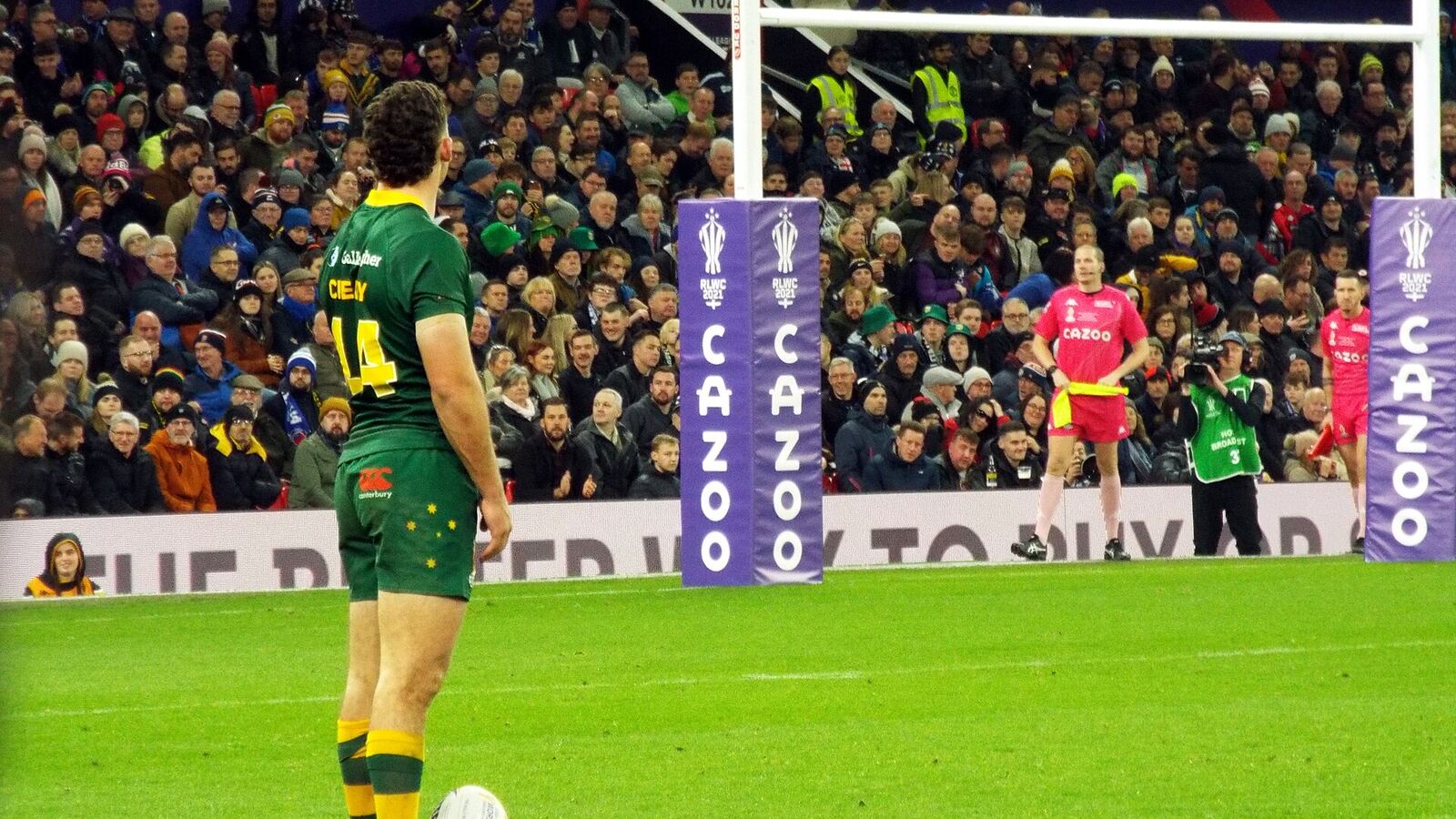
Use pitch sessions to see the full ball flight. Official rugby union posts are 5.6 m apart with the crossbar 3 m above the ground, so on a real pitch you get honest feedback on accuracy and distance. Note your results and bring what you learn back to your net routine.
| Where | Best for |
|---|---|
| Kicking net | Routine, contact, volume, technique work |
| Pitch with posts | Accuracy, distance, wind, match angles |
Looking after your body
Repeated kicking can be demanding on the legs and hips. Warm up, build volume gradually, rest between sessions and stop if you feel pain. Young players should follow their coach's guidance on how much kicking to do.
When choosing a kicking tee, check the height options, base and your competition's rules on what is allowed.
Frequently asked questions
Can I practise rugby goal kicking at home?
Yes, a kicking net lets you practise your routine and contact at home. You will still need sessions with real posts to check accuracy, distance and how the ball behaves in wind.
How far should I stand from a kicking net?
Close enough that off-line kicks still hit the netting. Start a few metres back and adjust as your accuracy improves.
Will a rugby net work for soccer or American football too?
Many nets are sold as multi-sport. Check the size, frame and mesh in the listing to make sure they suit each ball you plan to use.
How many kicks should I take per session?
There is no fixed number. Focus on quality kicks with your full routine, build volume gradually and follow your coach's advice.
Ready to set up your practice space?
Browse rugby kicking nets and compare sizes on AliExpress.
Some links on this page are affiliate links to AliExpress. If you buy through them we may earn a small commission at no extra cost to you. We don’t test or endorse individual listings, so always check the seller, sizes and return policy. Learn more.